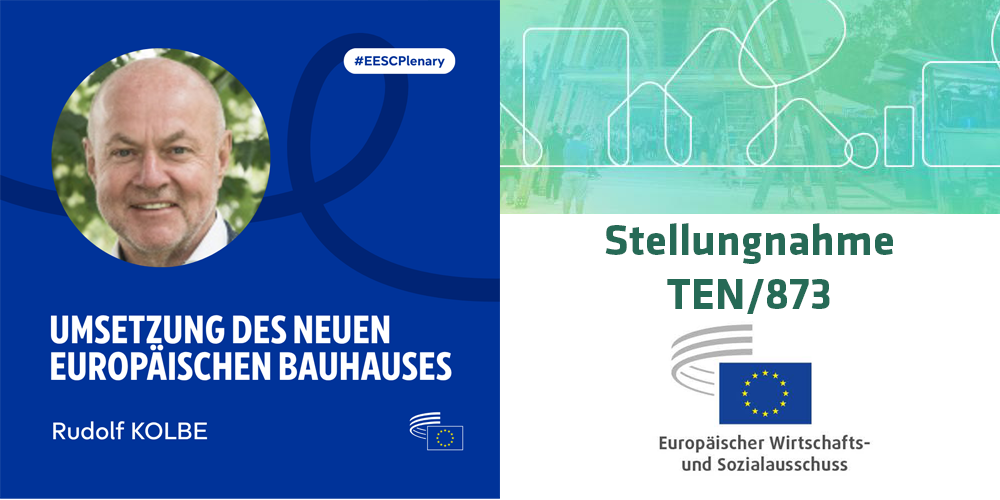

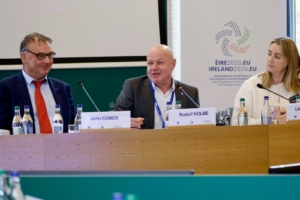
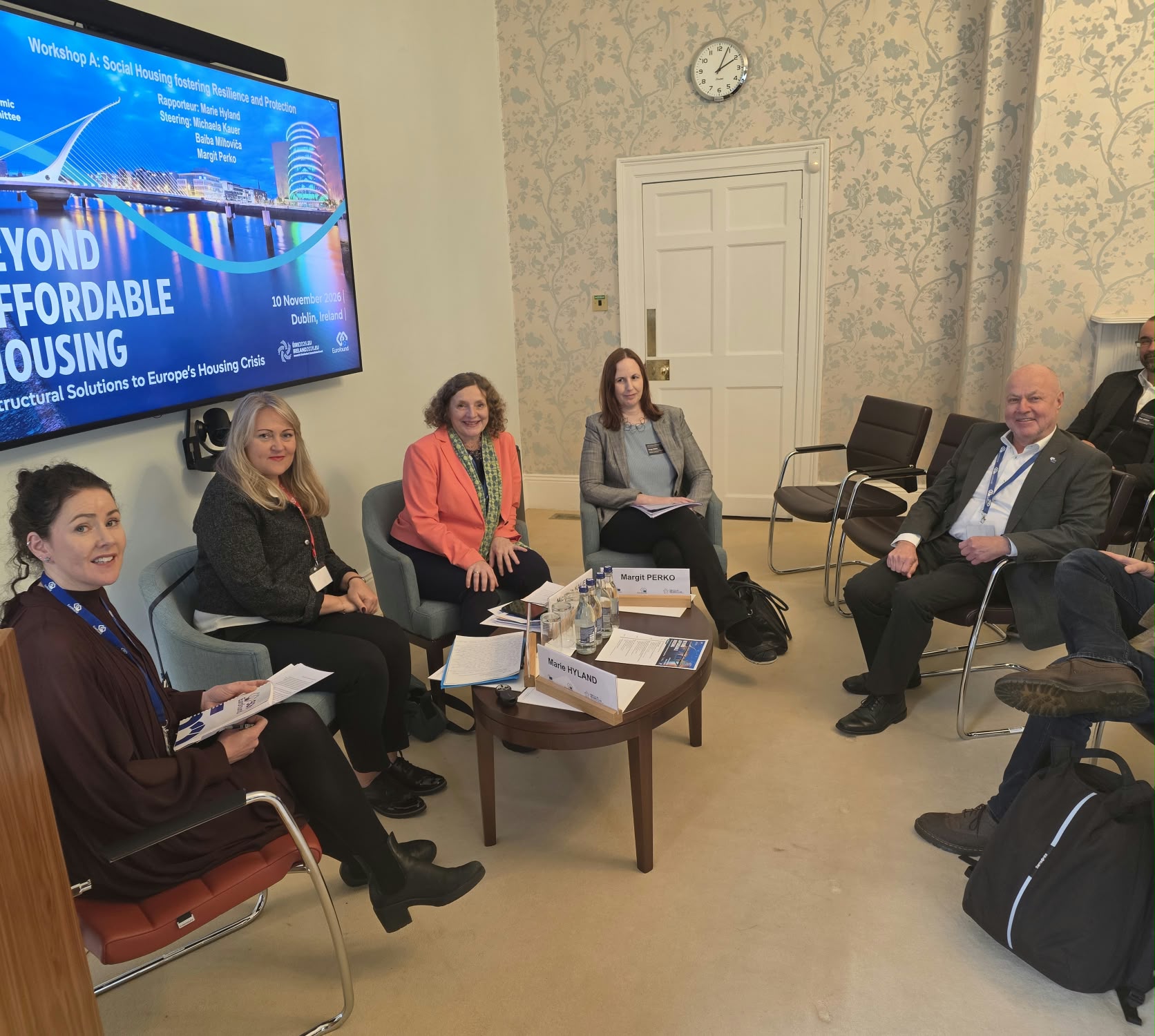
Today in Dublin EESC Member und CSO-Vicepresident Rudi Kolbe took part in the joint EESC–Eurofound conference „Beyond Affordable Housing: Structural Solutions to Europe’s Housing Crisis“, an Associated Event of the Irish Presidency of the Council of the EU.
The European Economic and Social Committee (EESC) continues to shine a spotlight on the housing emergency. At a conference in Dublin on 10 November held in partnership with Eurofound, the Committee pointed out that the EU now needs effective measures and practical solutions. The end goal: increase the supply of affordable and sustainable housing, improve access to it and bolster a consistent European response that fully respects Member States’ powers.
In Panel II on boosting sustainable housing supply, moderated by John Comer, he spoke as EESC rapporteur on implementing the New European Bauhaus.
The main points:
🔹 The fastest homes are often the ones we already have: vacant buildings, conversions and renovation.
🔹 Modern Methods of Construction can make a real difference, but they are not a solution on their own.
🔹 Quality from day one: in off-site production, design decisions come early, so architects and engineers must be involved from the start.
🔹 Savings must reach the people. In Austria’s limited-profit housing model, rents are based on costs – so when building gets cheaper, rents go down, not profits up.
🔹 At EU level: procurement that buys best value over the life cycle, smart rules with cross-border approval of systems and faster permits, and real support for SMEs and skills.
After the morning session, he also had the pleasure of opening Habitat for Humanity Ireland’s moving exhibition „Let’s Open the Door“ together with Jenny Williams – a strong reminder that a home is far more than a building.
In the afternoon, Workshop A on social housing fostering resilience and protection showed once more how much Europe can learn from well-established social and limited-profit housing systems – including Vienna’s.
Thank you to the EESC, Eurofound, the Irish Presidency and all speakers and participants for an inspiring day. Let’s keep working together in the Housing Alliance for affordable, sustainable and quality homes for all.
More information:
- Housing crisis – The EU now needs effective measures and practical solutions to make housing affordable
- Programme
- Speakers
- all relevant opinions
- TEN/873 – Implementing the New European Bauhaus (Rapporteur: Rudi Kolbe)


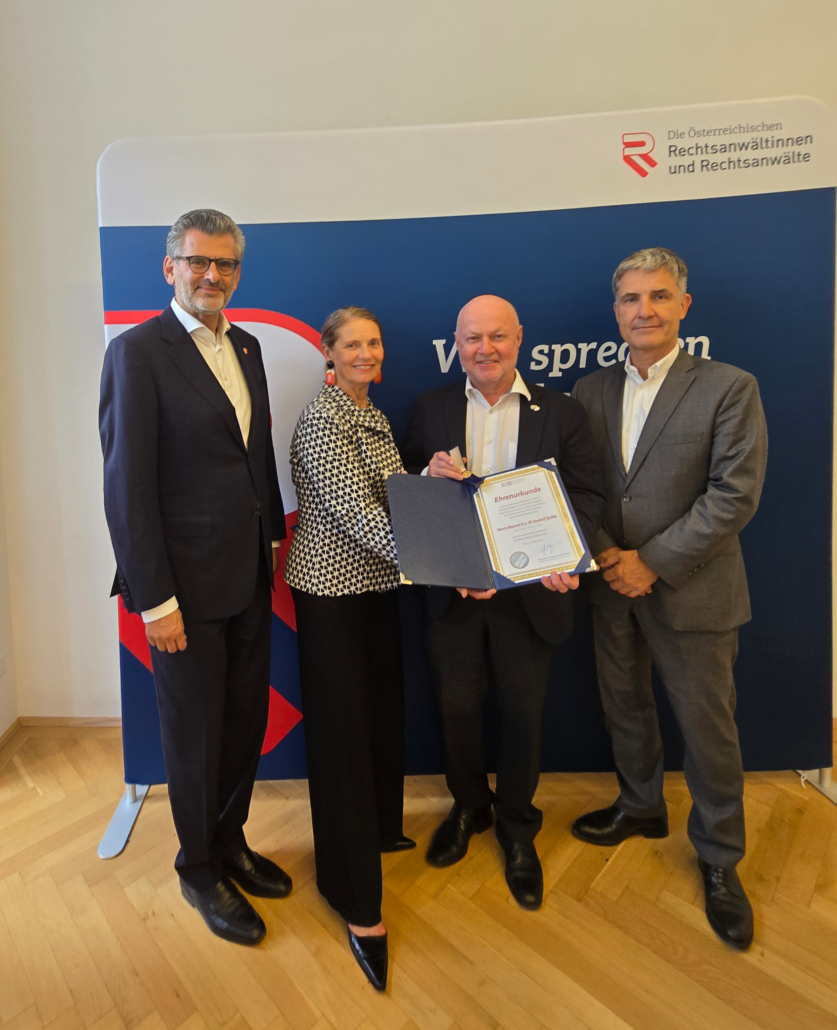
 „Die Freien Berufe arbeiten täglich mit besonders sensiblen Gesundheits-, Mandats-, Klienten-, Geschäfts- und Forschungsdaten. Ein erfolgreicher Cyberangriff ist daher nicht bloß eine technische Störung: Er kann die berufliche Handlungsfähigkeit unterbrechen, vertrauliche Beziehungen beschädigen und das Vertrauen in professionelle Leistungen erschüttern. Cybersicherheit ist deshalb eine berufliche Grundpflicht. Neben geeigneter Schutzsoftware braucht es geschulte Mitarbeiterinnen und Mitarbeiter, klare Abläufe, regelmäßige Datensicherungen sowie erprobte Notfall- und Wiederanlaufpläne“, stellt Kolbe einleitend fest.

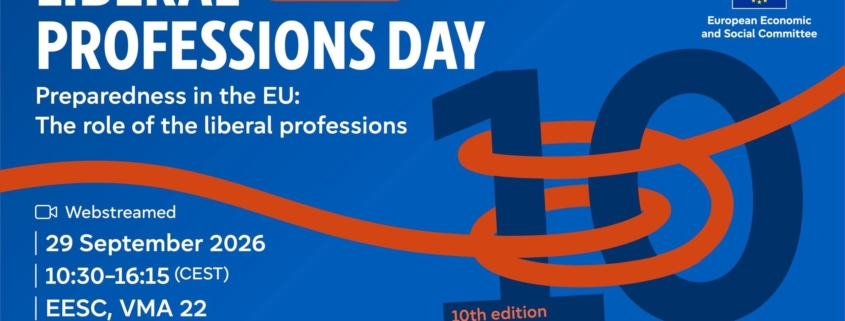
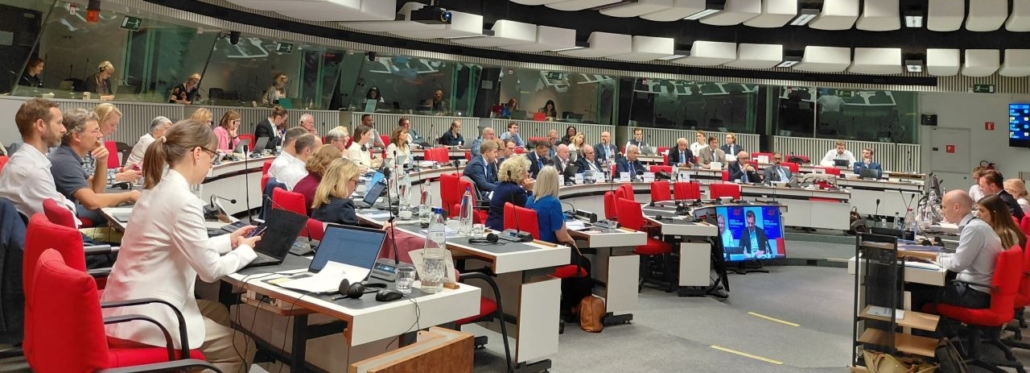
 „Europas Widerstandsfähigkeit entsteht nicht allein durch Gesetze, Infrastruktur oder technische Systeme. Sie entsteht vor allem dort, wo Menschen Verantwortung übernehmen, Institutionen Vertrauen schaffen und qualifizierte Fachkräfte auch unter schwierigen Bedingungen handlungsfähig bleiben“, erklärt Dr. Karin Hahne, Vizepräsidentin des Bundesverbandes der Freien Berufe.
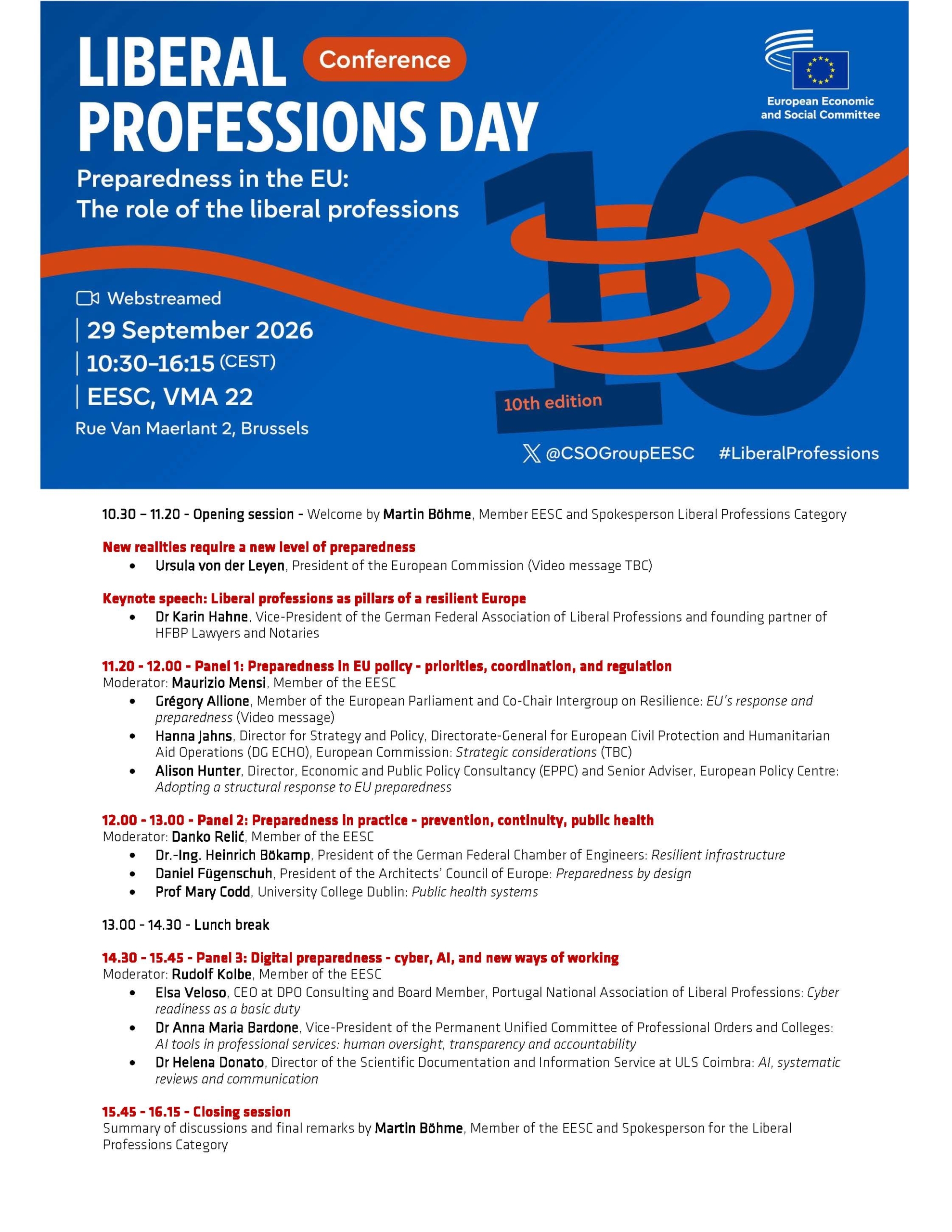
 Im ersten Panel „Preparedness in EU policy – priorities, coordination, and regulation“ standen klare Zuständigkeiten, kohärente Regeln und langfristige Investitionen im Mittelpunkt. Moderator und EWSA-Mitglied Maurizio Mensi betonte, dass Vereinfachung und Sicherheit miteinander verbunden und rechtsstaatliche Grundsätze auch im Krisenfall gewahrt werden müssen.Grégory Allione, Mitglied des Europäischen Parlaments und Co-Vorsitzender der Intergroup on Resilience, verwies auf die Bedeutung qualifizierter und einsatzbereiter Menschen. Alessandro Carrotta von der Generaldirektion ECHO der Europäischen Kommission hob den gesamtgesellschaftlichen Ansatz der EU-Vorsorgestrategie hervor; Kammern und Berufsverbände sollten ausdrücklich in die öffentlich-private Vorsorge-Taskforce eingebunden werden. Alison Hunter vom European Policy Centre unterstrich, dass Vorsorge keine kurzfristige Ausgabe, sondern eine Investition in Europas Stabilität und Handlungsfähigkeit ist.
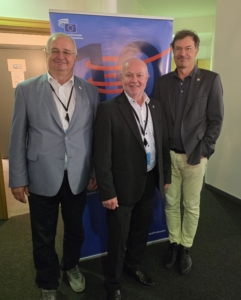 Das zweite Panel „Preparedness in practice – prevention, continuity, public health“ zeigte, dass Krisenfestigkeit lange vor dem Ernstfall entsteht. Moderator Danko Relić verwies auf die engen Abhängigkeiten zwischen Gesundheitsversorgung, Verkehr, Energie, Wasser, Kommunikation und Verwaltung.
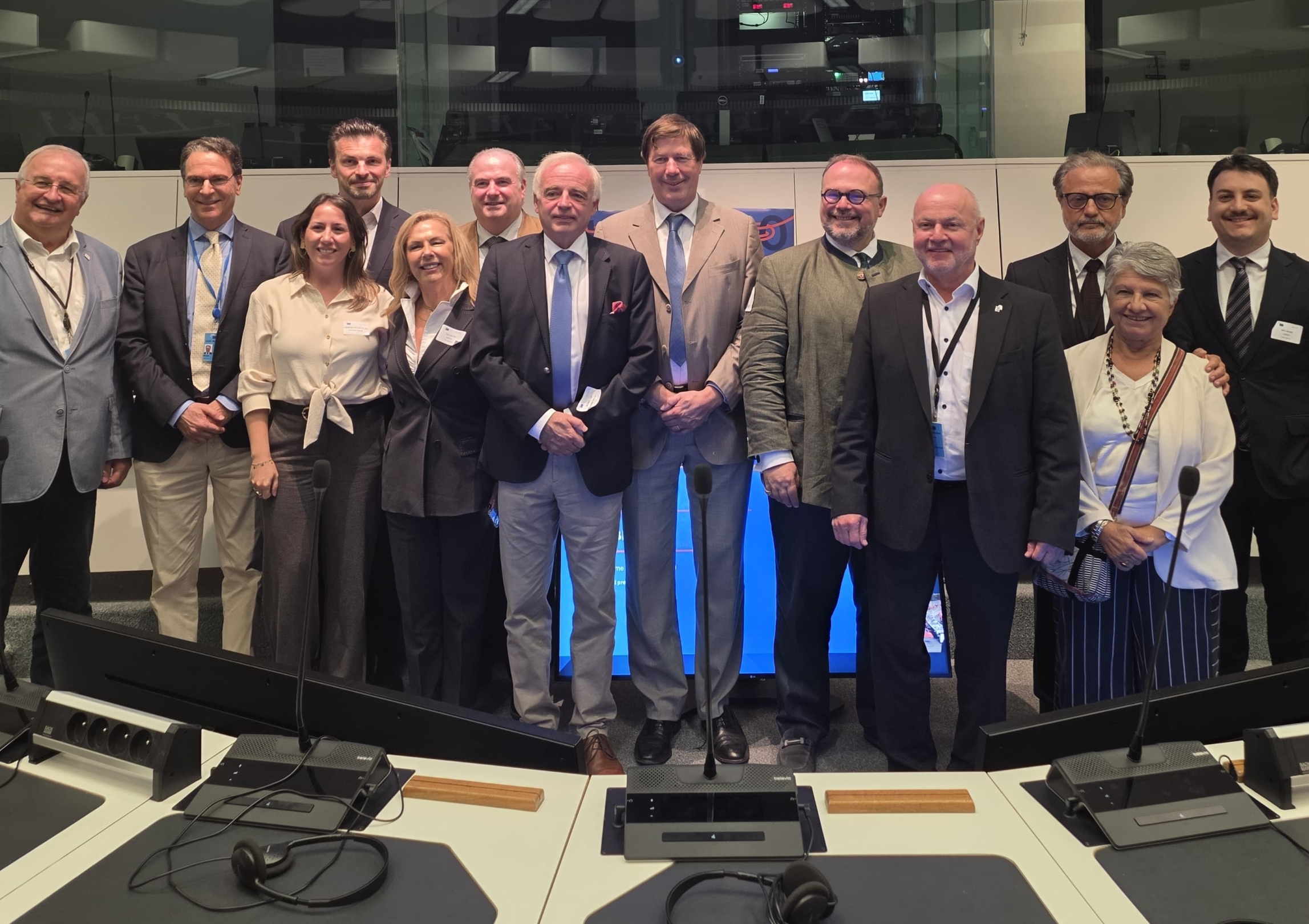
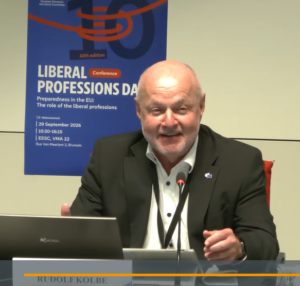 Im dritten Panel „Digital preparedness – cyber, AI, and new ways of working“ standen Cybersicherheit und der verantwortungsvolle Einsatz künstlicher Intelligenz im Mittelpunkt. Moderator und EWSA-Mitglied Rudolf Kolbe hob Vertrauen als verbindendes Leitmotiv hervor.




 chlechterstellung von Freiberuflern gegenüber unselbständig Beschäftigten